

Coffee is regarded as one of the most popular beverages in the world.
Millions of people live and work depending on coffee in the early mornings and in the late working time.
To most people, a day without coffee cannot be complete.
There is however, with its popularity, an essential question.
can coffee cause acne?
You are not alone, and in case you have recently observed the pimple or acne flare-up and wondered whether the coffee habit could be the cause.
Being a reputable clinic to treat acne in Wakad, Pune we often come across patients, who are convinced that coffee is one of the factors that cause their skin issue.
It is not so simple as yes and no.
To understand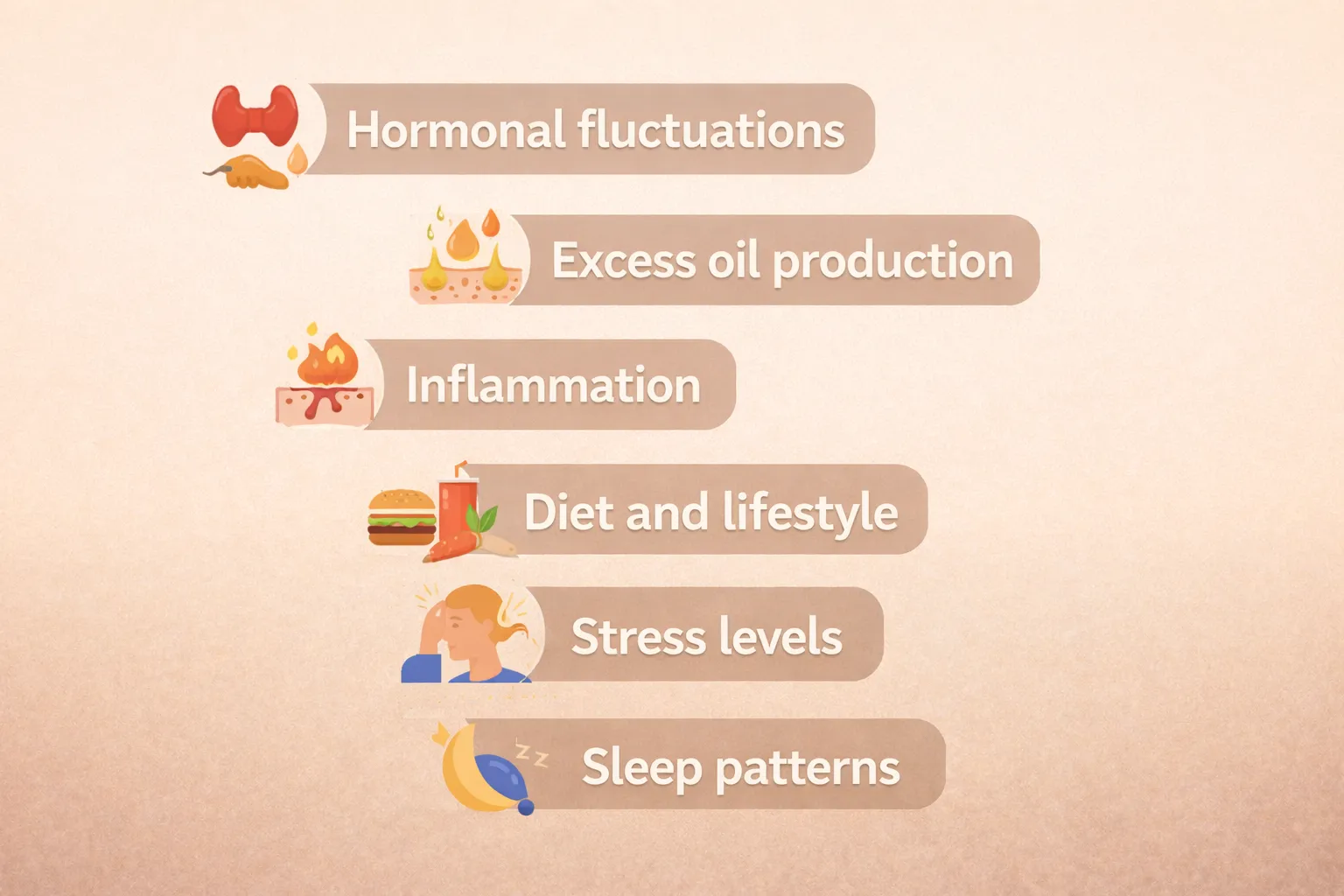
Understanding Acne: A Quick Overview
Acne is an inflammatory skin disorder that is chronic and occurs as hair follicles get blocked by oil (sebum), skin cells and bacteria. It is affected by a number of internal factors and external factors which include:
- Hormonal fluctuations
- Excess oil production
- Inflammation
- Diet and lifestyle
- Stress levels
- Sleep patterns
Because coffee can influence hormones, stress, sleep, and diet, it may play a role in acne development – either directly or indirectly.
What Does Coffee Actually Contain?
Coffee is not mostly taken on its own. A basic cup of coffee – and that too in India – might include:
- Caffeine
- Milk or cream
- Sugar or flavored syrups
The effects that each of these components may have on the health of the skin may vary.
Their respective effects can be used to explain the correlation between coffee and acne.
Does Caffeine Cause Acne?
Caffeine does not actually lead to acne.
It neither blocks pores nor pimples it does not produce on its own.
Nevertheless, caffeine has other effects on the body which can be indirectly related to the development of acne.
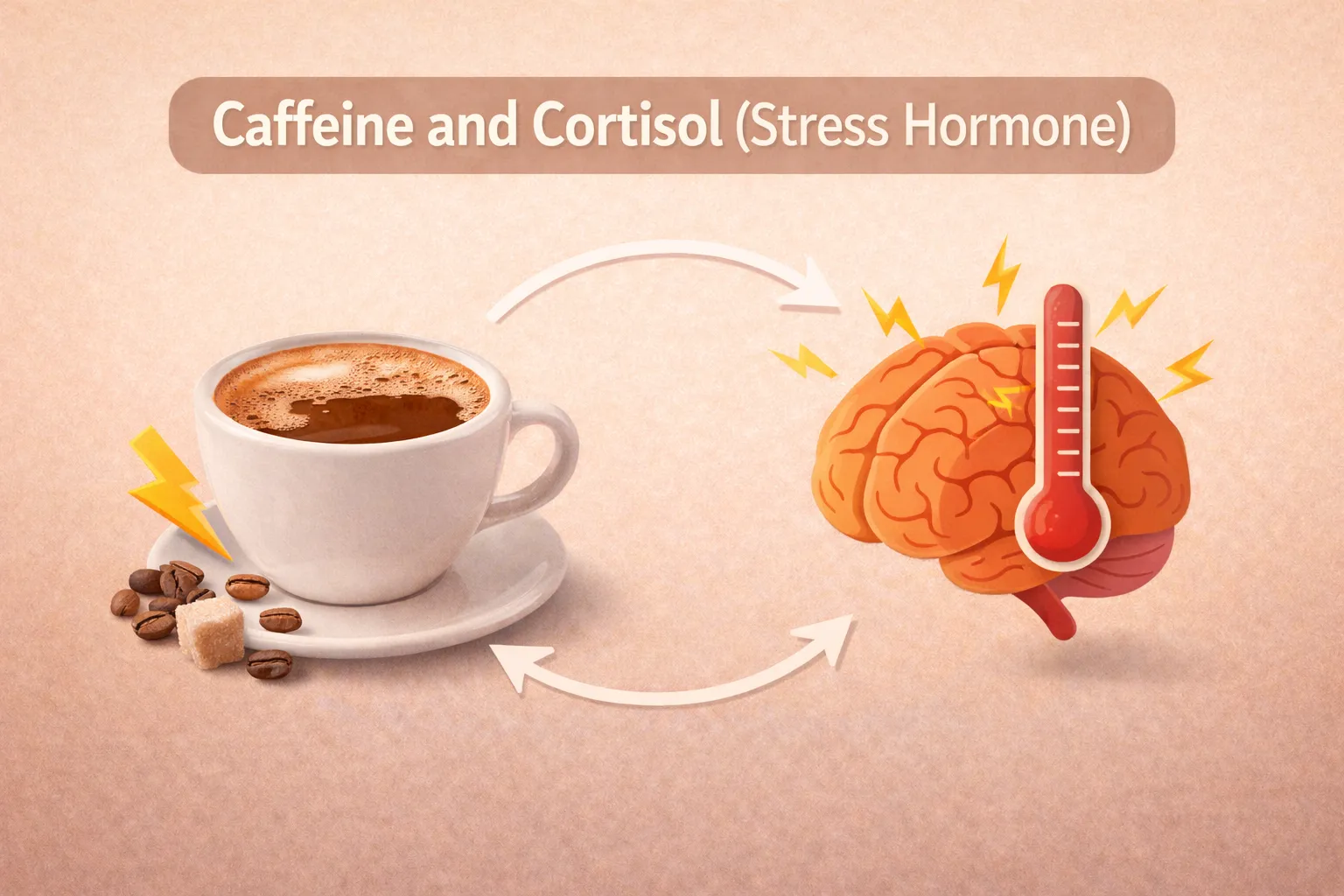 Caffeine and Cortisol (Stress Hormone)
The consumption of caffeine prompts the adrenal glands, thereby enhancing the secretion of cortisol, the major hormone of stress in the body.
At prolonged elevations in cortisol levels it can:
- Increase oil (sebum) production
- Worsen inflammation in the skin
- Slow down skin healing
- Trigger acne flare-ups, especially on the jawline and cheeks
Individuals who have acne prone skin would be more sensitive to these hormonal changes.
In their case, high doses of caffeine may exacerbate acne.
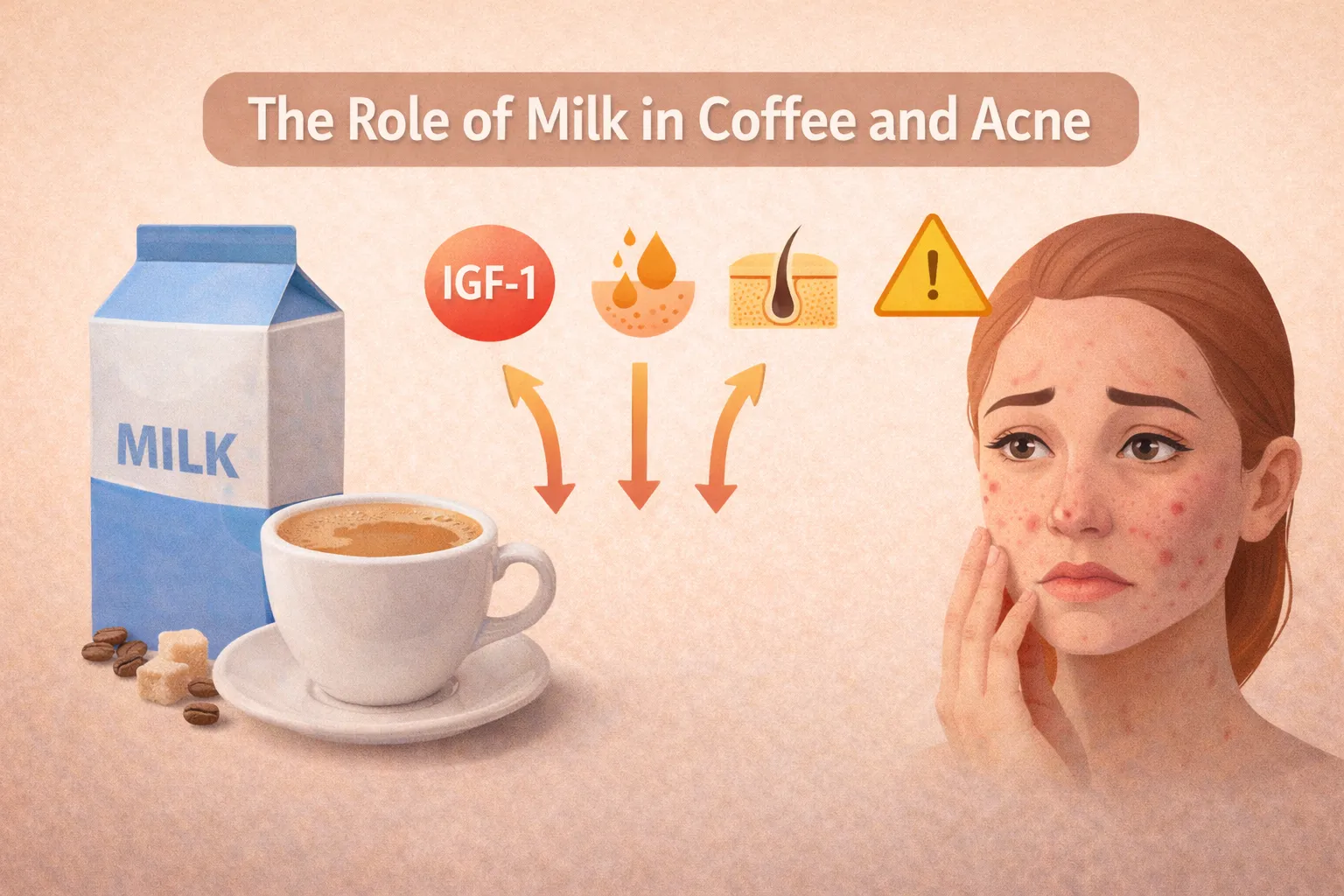
The Role of Milk in Coffee and Acne
One of the most studied causes of acne in the diet is milk.
Some of the scientific findings have attributed acne to the consumption of milk especially cow milk.
Milk raises the Insulin-like Growth Factor 1 (IGF-1), which
- Stimulates oil glands
- Increases skin cell turnover
- Promotes clogged pores
As milk is consumed frequently in coffee, it can cause hormonal imbalance and acne eruptions, particularly among the teenagers and young adults.
It seems that skim milk is more acnes-inducing than full-fat milk based on its hormonal structure.
Sugar and Flavored Coffee: A Major Acne Trigger
Another critical consideration factor is sugar.
Most of the trendy coffee products – lattes, cappuccino, and flavored coffees – are packed with sugars.
Overconsumption of sugar will result in:
- Rapid spikes in blood sugar levels
- Increased insulin release
- Inflammation throughout the body
When the level of insulin is high, the oil glands are stimulated, and inflammation is promoted to make acne, and this is the best environment to develop acne.
This is the reason why sweetened coffee beverages might also be more damaging to acneic skin than ordinary black coffee.
Coffee, Sleep Disruption, and Acne
A very good number of individuals take coffee to combat fatigue and stress.
Although it might be a quick fix to alertness, too much or late coffee might interfere with sleep patterns.
Inadequate sleep has adverse effects on the skin which are:
- Increasing cortisol levels
- Reducing skin repair and regeneration
- Weakening the skin’s barrier function
Acne eruptions can be exacerbated when the skin lacks sufficient time to rest in repairing itself at night.
That is why dermatologists tend to recommend not to take coffee too late in the evening.
Can Coffee Cause Dehydration and Acne?
Caffeine is a weak diuretic, or in other words, can elevate the loss of fluid in the body in its excess amount.
One of the ways in which dehydration can also impact the health of the skin is unanticipated.
On the occasion of dehydration of the skin, it can:
- Feel dry and tight
- Overproduce oil to compensate
- Become more prone to clogged pores
This compensatory production can be a contributive factor to acne particularly when the aspect of hydration is not taken into consideration.
Does This Mean You Should Stop Drinking Coffee?
Such compensatory oil production becomes a contributor to acne and this occurs when hydration is overlooked.Not necessarily.
Moderation is the key to most of the people.
Coffee should not be absolutely avoided until it is evident that it results in acne outbreaks.
Tips that are recommended by the dermatologists to acne prone people include:
- Limit coffee to 1–2 cups per day
- Choose black coffee or plant-based milk alternatives
- Avoid sugar, syrups, and flavored creamers
- Drink coffee earlier in the day
- Increase water intake
It is necessary to listen to the response of your skin.
Should the acnes be getting better when you cut down on the amount of coffee you intake, chances are that your body is sensitive to caffeine or dairy.
When Diet Changes Are Not Enough
Genetics, hormones, and underlying skin conditions are in most cases some of the factors that trigger acne.
In and of itself, dietary changes may not fully be the solution to acne.
In case you still have breakouts even after making some lifestyle changes, then seek professional dermatological care.
Advanced Acne Treatment in Pune
Eva Pimples, Skin and Hair Clinic offers a complete acne and acne scar treatment depending on the type of skin.
We have skilled dermatologists that apply evidence-based methods in long-term outcomes.
The treatments that we have toward our acne are:
- Chemical peels to reduce oil and unclog pores
- Intense Pulsed Light (IPL) therapy
- Low-Level Laser Therapy (LLLT) for inflammation control
- Fractional Q-Switch Nd:YAG laser for acne scars
Permanent scarring can be avoided by early intervention and the confidence of the skin can also be enhanced.
Frequently Asked Questions
What drinks can cause acne?
Acnes is also known to be caused by sugary drinks, soda, energy drinks, and milk based drinks.
It is possible to use low-sugar and dairy-free options.
Can coffee trigger acne?
Coffee on its own is not a direct cause of acne, however, caffeine, a milk, sugar and other causes associated with stress can lead to a breakout.
Is milk good for acne?
A large intake of cow milk has been associated with acne.
Reducing the amount of dairy can help alleviate acne in a person.
Should I stop drinking coffee if I have acne?
Not necessarily. It is normally enough to be moderate and make conscious decisions.
Nevertheless, it is possible that people who have severe acnes should eliminate caffeine even more.
Final Thoughts
Coffee is not the real problem of clear skin.
Nevertheless, the quantity of drinks you consume, the supplements you put in it, and their impact on your stress and the level of sleep are all relevant.In case of acne, even though lifestyle change is followed, professional dermatological intervention can prove to be important.
The combination of proper diet, lifestyle, and treatment can give one healthy skin.